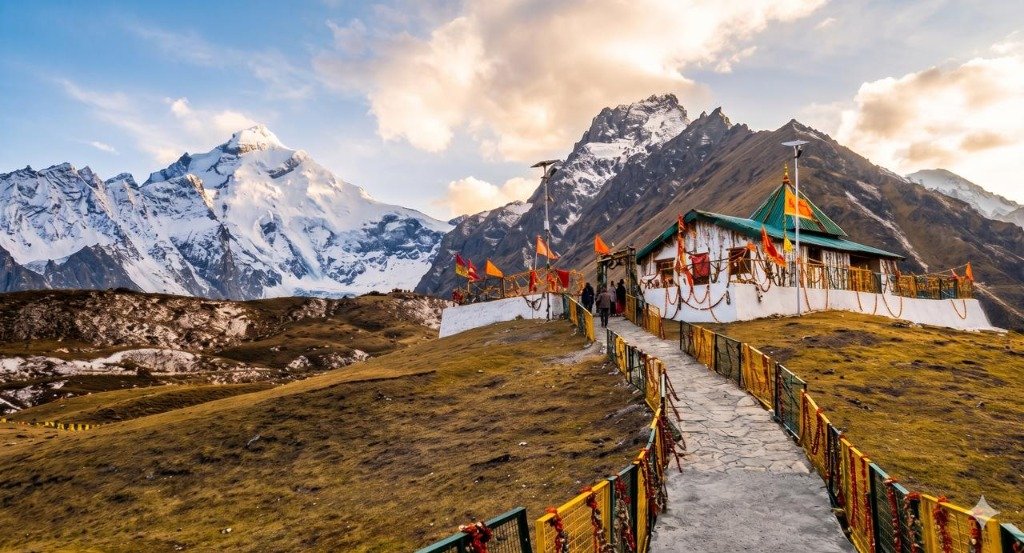
Adi Kailash Mandir Kapat Closed on 5th Nov: Winter Closure Rituals, ILP Permit Status & Ground Reality Update
Executive Fact-Check: Adi Kailash Mandir Kapat vs. Official ILP Status
Direct Answer for Devotees: On 5th November 2026, the sacred portals (kapat) of the ancient Shiva-Parvati Temple at Jyolingkong (4,570m / 14,995 ft) were officially closed for the winter season with traditional Vedic rituals. However, the Sub-Divisional Magistrate (SDM) Office in Dharchula has NOT yet declared an official Inner Line Permit (ILP) closing deadline. While permits technically remain on a discretionary daily weather basis, high-altitude freezing (-15°C), water line freeze-ups, and the native Rung tribal winter migration (Kooch) make tourist travel practically unviable. Yatra planning must now look ahead to May 2027.
1. The Sacred Kapat Closure Ceremony at Jyolingkong (November 5)
On the auspicious morning of November 5, 2026, amidst the reverberating echoes of conch shells (shankhnaad), Vedic mantras, and the chilling Himalayan winds of Vyas Valley, the sacred doors (kapat) of the holy Shiva-Parvati Temple at Jyolingkong (4,570 metres / 14,995 feet) were formally drawn shut for the winter season.
The sacred temple, perched in the shadow of Mount Adi Kailash (5,945m) and on the sacred perimeter of Parvati Sarovar (Gauri Kund), witnesses thousands of devotees throughout the summer and autumn months. During the closing ceremony, the local temple servitors, along with representatives from the local administration and Indo-Tibetan Border Police (ITBP) personnel stationed at the advanced border outpost, conducted the final Maha Aarti, Havan, and circumambulation before the sanctum sanctorum was sealed until the arrival of spring in May 2027.
Sanctum Sealing: The akhand jyoti was ritualistically transitioned, and the holy deity was winterized according to long-standing Kumaoni Shaivite traditions.
Elevation of Closure: At 4,570m, this is one of the highest consecrated Shiva temples in the Indian Himalayas, exceeding the altitude of Kedarnath Dham (3,584m) by nearly 1,000 vertical metres.
Consecrated Solitude: Following the closure, Mount Adi Kailash passes into six months of undisturbed snow-bound penance, enveloped by dense glacial pack ice and winter temperatures dropping as low as -25°C.
2. Critical Update: Inner Line Permit (ILP) Closing Date Not Confirmed Yet
The most frequent inquiry our team at Rudraansh Yatra has received over the past week is: "Has the government completely closed the Inner Line Permit for Adi Kailash and Om Parvat?"
Here is the official, verified administrative position directly from the Sub-Divisional Magistrate (SDM) Office in Dharchula and District Administration Pithoragarh:
"The formal closure of the temple kapat at Jyolingkong is an ecclesiastical and ritual tradition determined by the temple trust and priests. As for the civil Inner Line Permit (ILP), the District Administration has NOT declared an official cutoff or closing date yet. Permits are processed dynamically on a daily basis depending strictly on weather stability and road clearances from the Border Roads Organisation (BRO)."
While the permit counter at Dharchula has not slammed a bureaucratic door shut with a fixed notification, travelers must not mistake the absence of an official closing date for an invitation to travel. There is a massive divergence between what is legally permissible on paper and what is physically survivable on the ground.
| Aspect | Mandir Kapat (Temple Doors) | Inner Line Permit (ILP) | Ground Logistics & Homestays |
|---|---|---|---|
| Current Status | Officially Closed (5th Nov) | No Official Cutoff Date Yet | Shutting Down / Unviable |
| Responsible Body | Local Priests & Temple Committee | SDM Dharchula / DM Pithoragarh | Rung Tribal Village Homestays |
| Darshan Possibility | Outer view of peak & lake only | Subject to ITBP post clearance | Severe lack of food/water/rooms |
| Safety Advisory | Sacred rituals suspended | Discretionary daily approvals | High hypothermia & freeze hazard |
3. The Unforgiving Ground Realities Beyond Dharchula Right Now
As native mountaineers and operators physically rooted in Pithoragarh, our responsibility is to provide travelers with the unfiltered, boots-on-the-ground truth. Here is why planning a yatra after the 5th November mandir closure is practically hazardous:
1. Freezing of Natural Gravity Water Pipelines
Villages in the Vyas Valley — including Nabi (3,110m), Gunji (3,200m), and the military advanced base at Jyolingkong (4,570m) — rely on open gravity-fed water pipelines drawn from glacial streams. By mid-November, daytime temperatures struggle to cross 2°C, and night temperatures plunge between -10°C and -18°C. Pipelines freeze solid into solid columns of ice. Running water for toilets, kitchens, and daily ablutions completely ceases.
2. Annual Tribal Transhumance Migration (The 'Kooch')
The indigenous Rung (Bhotiya) community of Vyas and Darma Valleys has practiced seasonal migration for centuries. Between late October and early November, local homestay owners pack their belongings, gather their livestock, and migrate down to their winter residences in Dharchula and Didihat (locally known as Kooch). Once the villagers depart, there are no civilian homestays, heating facilities, or commercial kitchens operational in Nabi, Gunji, or Kuti.
3. Black Ice and Road Instability at Chialekh Pass
The road constructed by the Border Roads Organisation (BRO Project Hirak) represents an engineering marvel, but high-altitude sections — particularly the hairpin ascents around Chialekh Pass (3,200m), Garbyang, and Najang — suffer from persistent black ice. Meltwater from afternoon sun freezes into an invisible, slick sheet of ice during the sub-zero night, making vehicle traction treacherous even for 4x4 Mahindra Boleros.
4. Medical and Evacuation Vulnerability
High Altitude Pulmonary Edema (HAPE) and acute mountain sickness (AMS) remain severe risks above 4,000 metres. In peak season, state medical teams and oxygen depots are stationed along the route. During late November, local medical posts downscale, civilian connectivity is severed, and winter blizzards frequently ground emergency helicopter evacuations.
4. What About Om Parvat Darshan? Can You Still See the "ॐ"?
Unlike Adi Kailash, which centers around the sacred Shiva-Parvati Temple at Jyolingkong, Om Parvat (5,590m) is a colossal natural mountain peak whose sacred Sanskrit syllable "ॐ" is formed entirely by natural snow deposits on its black shale face. The viewing point is at Nabidhang (4,246m), opposite the Lipulekh Pass border ridgeline.
Since Om Parvat is an open geographical vista rather than an enclosed shrine, it has no physical doors to close. However, civilian access to Nabidhang requires passing the ITBP checkposts at Garbyang, Gunji, and Kalapani. Because of extreme cold, high winds, and frozen water infrastructure at Kalapani, authorities turn back non-essential tourist traffic. While the mountain continues to display its divine snow signature, access to it is now effectively quarantined by nature.
5. Road Ahead: The 2027 Yatra Reopening Roadmap
With the mandir kapat securely closed and winter snowfall descending on the Kumaon Himalayas, the focus shifts to the Spring 2027 pilgrimage season. Here is the operational timeline for the upcoming year:
Deep Winter Period (December 2026 – April 2027): Complete snow blanket. Roads beyond Tawaghat are manned strictly by ITBP and Army garrisons. BRO maintains snow-clearing operations strictly for strategic defence supplies.
BRO Snow Clearance (April 2027): Heavy earthmovers, dozers, and snow cutters begin clearing the dense 4-to-8-foot snow drifts from Chialekh Pass, Gunji, and the Jyolingkong spur.
Native Rung Return Migration (Early May 2027): Homestay families return to Vyas Valley, re-establishing water pipelines, solar power setups, and organic village kitchens.
Official Kapat Opening & First Yatra Batch (May 10 – May 15, 2027): The sacred kapat of the Shiva-Parvati Temple will reopen following spring puja ceremonies. Civilian Inner Line Permits will officially resume for the 2027 season.
A Personal Note from Dheerendra Rautela, Founder of Rudraansh Yatra:
"Adi Kailash is not an ordinary sightseeing destination — it is an arduous high-altitude tapasya. When the temple kapat close on November 5, the mountains ask us to pause and honor their silence. We urge all pilgrims to not attempt unauthorized or rushed winter excursions. Save your devotion for May 2027, when the snows begin to melt, the temple doors reopen, and the Vyas Valley welcomes you with pure grace."
Frequently Asked Questions (AEO & Pilgrim Guide)
Plan Your Sacred Adi Kailash & Om Parvat Yatra for Spring 2027
Travel with Pithoragarh's native ground team. 100% official SDM Inner Line Permit clearance, private 4x4 Mahindra Bolero fleet, certified local guides, and authentic Bhotiya tribal homestays.