Adi Kailash Yatra for Senior Citizens 2026: Age Limit, Safety, Medical Cert & Best Months
🙏 Adi Kailash Yatra for Senior Citizens — Quick Safety Facts
In October 2025, our Pithoragarh team guided a 72-year-old retired schoolteacher to the Adi Kailash temple at Jyolingkong (4,750m). She rode a 4x4 Bolero all the way and walked just 200 metres on flat ground. The key facts every family should know before deciding:
In October 2025, we guided a 72-year-old retired schoolteacher from Varanasi to the Adi Kailash temple at Jyolingkong — 4,750 metres above sea level. She had never trekked in her life. She arrived by 4x4 Bolero, walked 200 metres on flat ground, and stood before the sacred peak with folded hands. Her family had called us three times worried about whether she should go at all.
The answer, if you ask our ground team in Pithoragarh: yes, the Adi Kailash Yatra is safe for healthy senior citizens — but only with the right preparation, timing, and a direct local operator who understands the terrain. Here is the complete safety breakdown we give families before every yatra:
1. No Strenuous Trekking Required
Historically, visiting Adi Kailash required a difficult 100km+ trek on foot over dangerous mountain tracks. Today, the Border Roads Organisation (BRO) has completed roads directly to the viewpoints. Devotees can travel in robust 4x4 vehicles (like Mahindra Boleros) all the way to Jyolingkong (for Adi Kailash and Parvati Tal) and Nabhidhang (for Om Parvat). Senior citizens only need to walk short distances (ranging from 100 to 300 meters) on relatively flat terrain to reach the temples, making the pilgrimage physically accessible for the elderly.
2. Understanding the High Altitude and AMS
While trekking is eliminated, the high altitude remains a major factor. The maximum altitude on the yatra is at Jyolingkong, which sits at 4,750 meters (approx. 15,600 feet). Acute Mountain Sickness (AMS) and low oxygen levels are common risks. To ensure safety, a gradual ascent with acclimatization is vital. Devotees climb from Dharchula (915m) to Gunji (3,200m), where they must spend a mandatory acclimatization rest day. Seniors with chronic asthma, high blood pressure, or severe cardiac history must consult their physician before planning the journey.
Altitude Safety Profile for Senior Citizens — Key Stops
3. Rough Vyas Valley Road Conditions
Although roads have reached the viewpoints, they are high-altitude border tracks. Certain stretches are unpaved, narrow, and bumpy, involving 6 to 8 hours of travel per day in 4x4 vehicles. Seniors with acute back pain, spine problems, or severe osteoporosis should consult a doctor, use support cushions, and request the front or middle seats in the vehicles to minimize discomfort.
4. Mandatory Medical Fitness Certificate & Permits
Due to the proximity of the Indo-Tibetan border, the yatra requires an Inner Line Permit (ILP) (ILP). A critical step in the permit process is obtaining a certified high-altitude medical fitness report. Senior citizens must undergo medical tests (including BP, ECG, and blood sugar checks) to certify they are fit for high altitudes before being allowed past the Gunji and Dharchula checkposts.
How Rudraansh Yatra Prioritizes Senior Citizen Safety:
Portable Oxygen & First Aid: We carry portable oxygen cylinders, oximeters, and comprehensive first aid kits in all our 4x4 vehicles to tackle sudden drops in oxygen levels.
Local Homestay Comforts: We host our senior travelers in cozy, insulated community homestays in Nabi and Gunji, featuring warm bedding, clean facilities, and light, easily digestible local organic meals.
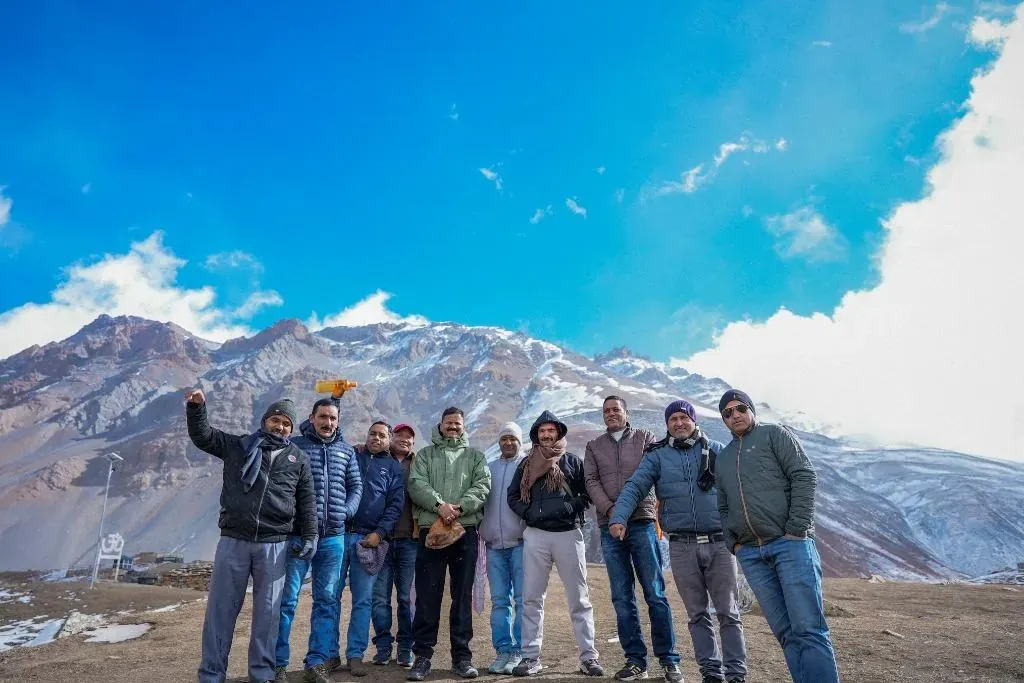
Native Kumaoni Guides: Our guides are local residents of the Vyas Valley who understand the terrain, real-time weather changes, and coordinate directly with ITBP military health posts for quick medical assistance.
Evacuation Logistics: We maintain standby backup vehicles and direct communication with administrative offices in Dharchula to manage emergency returns swiftly.
Frequently Asked Questions (FAQs):
Q1: What is the official age limit for the Adi Kailash Yatra?The general recommended age limit is between 10 and 65 years. However, senior citizens up to 70–75 years can safely join the yatra if they are in good health, have normal medical test reports (BP/ECG), and receive a high-altitude fitness clearance certificate from a government doctor.
Q2: Is there walk support or pony services available at the viewpoints?Yes, at Jyolingkong and Nabhidhang, local ponies and walking supports are available if needed to help elderly pilgrims cover the final short walk to the temples or the banks of Parvati Tal.
Q3: Can senior citizens with diabetes or high blood pressure do this yatra?Yes, senior citizens with managed diabetes or high blood pressure can successfully complete the yatra. They must carry their regular medicines (see our complete Adi Kailash packing list), monitor their blood pressure regularly, drink plenty of water, and avoid physical strain or sudden heavy movements.
Q4: Which is the best month for senior citizens to plan the Adi Kailash Yatra? May to June and September to October are the best months. The skies are clear, the weather is pleasant during the day, and road conditions are stable. July and August should be completely avoided (see 2026 monsoon closure & reopening update) due to monsoon rains, which cause landslides and road blockages. Q5: What happens if an elderly pilgrim suffers from breathing difficulties?In case of low oxygen or breathing issues, we immediately administer portable oxygen, check oxygen saturation using an oximeter, and transport the pilgrim to the nearest ITBP military medical camp or to a lower altitude (like Dharchula). Our local guides are fully trained in handling these emergencies.